
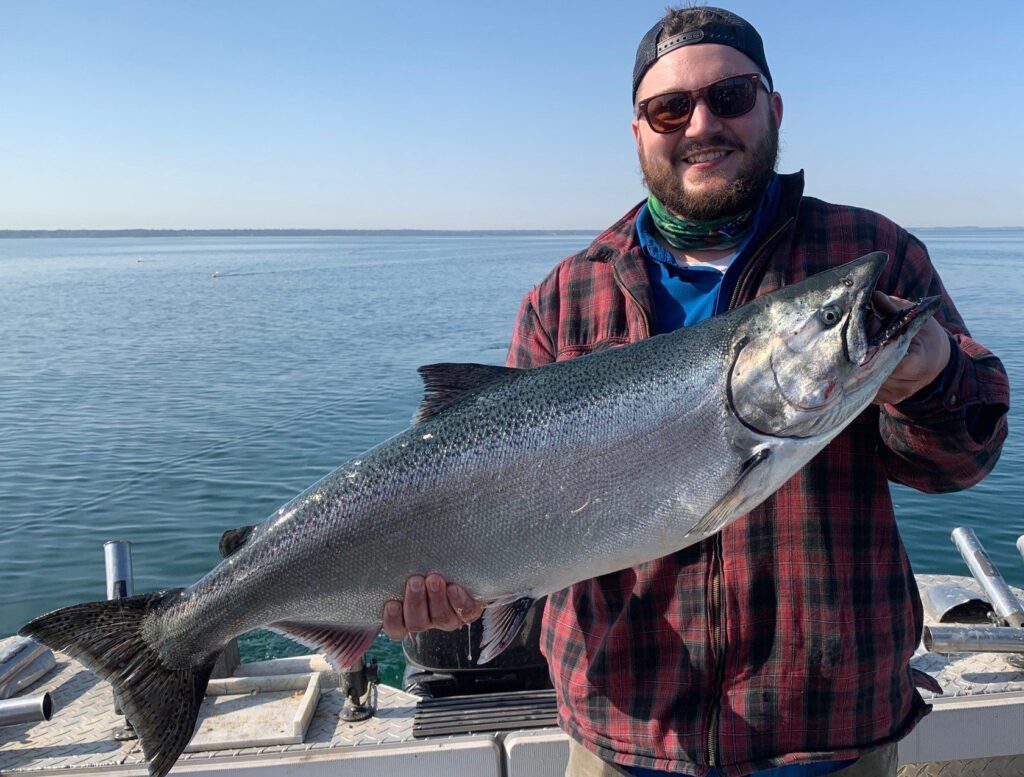
The best time to catch salmon is not always the best time to keep one for dinner. In general, eating quality depends less on a specific date and more on where the fish is in its spawning cycle. A bright salmon still feeding in Lake Michigan can have noticeably different texture and flavor than the same fish once it has entered the St. Joe River on its fall spawning run.
Why Timing Changes What’s on Your Plate
A salmon feeding in Lake Michigan is still building and maintaining the energy reserves it needs to survive. As the spawning season approaches, mature fish begin shifting that stored energy toward migration and reproduction instead, which changes what the fish has left for eating quality.
Penrod’s Captain Ted put it simply: it’s healthier to catch them in the lake than it is in the river. The difference is in the meat itself, not just the fight, and it’s the reason lake season and river season call for different expectations at the table.
The Best Window for Eating Quality
Spring through summer generally offers the most dependable window for salmon intended for the table. During that time, fish are still actively feeding in the lake and have not yet undergone the physical changes associated with the fall spawning migration, which keeps the meat rich, oily, and pink.
That window narrows as summer goes on. By mid to late August, eggs and milt begin developing more noticeably, so pairing your trip with the best time to fish Lake Michigan guide can help you plan around that earlier window if eating quality is the priority.
What Happens Once Salmon Enter the River
Once salmon move into the river to spawn, they stop feeding and rely on stored energy to grow and survive. They can still strike lures or bait, but at that point, instinct and aggression drive the bite, not hunger.
That shift is what changes the fillet. As the fish draws on its stored reserves to fuel the migration and spawn, the meat turns from pink to white, and the flavor becomes noticeably milder as the run progresses.
If You Still Want to Keep a River-Caught Salmon
A white fillet is not a spoiled one, and plenty of people prefer it. In fact, Captain Ted noted that some anglers prefer eating salmon in the fall because it lacks the strong flavor associated with lake-caught fish, and mild white meat takes well to smoking or canning.
If the pink color matters to you, it can be brought back in the canning process. Anglers commonly add tomato juice or spices when canning white, river-caught salmon, which restores the color people expect from a salmon patty even though the fish itself came out of the river white.
Book Your Trip Today!
For the best eating quality, book a Lake Michigan salmon and trout charter in spring or summer, when the fish are still actively feeding and have not yet begun the fall spawning run.
FAQ
When is salmon usually best for eating?
Spring through summer, while the fish are still actively feeding in the lake and before the physical changes of the spawning run set in. Once salmon enter the river, they stop feeding to grow and rely on stored energy for the spawning migration, which turns the meat from pink to white and mellows the flavor.
Is white, river-caught salmon safe to eat?
It is simply milder in flavor than lake-caught salmon and works well smoked or canned.
Can I get river-caught salmon to look pink again for canning?
Adding tomato juice or spices during canning is a common way to restore the pink color people expect.