
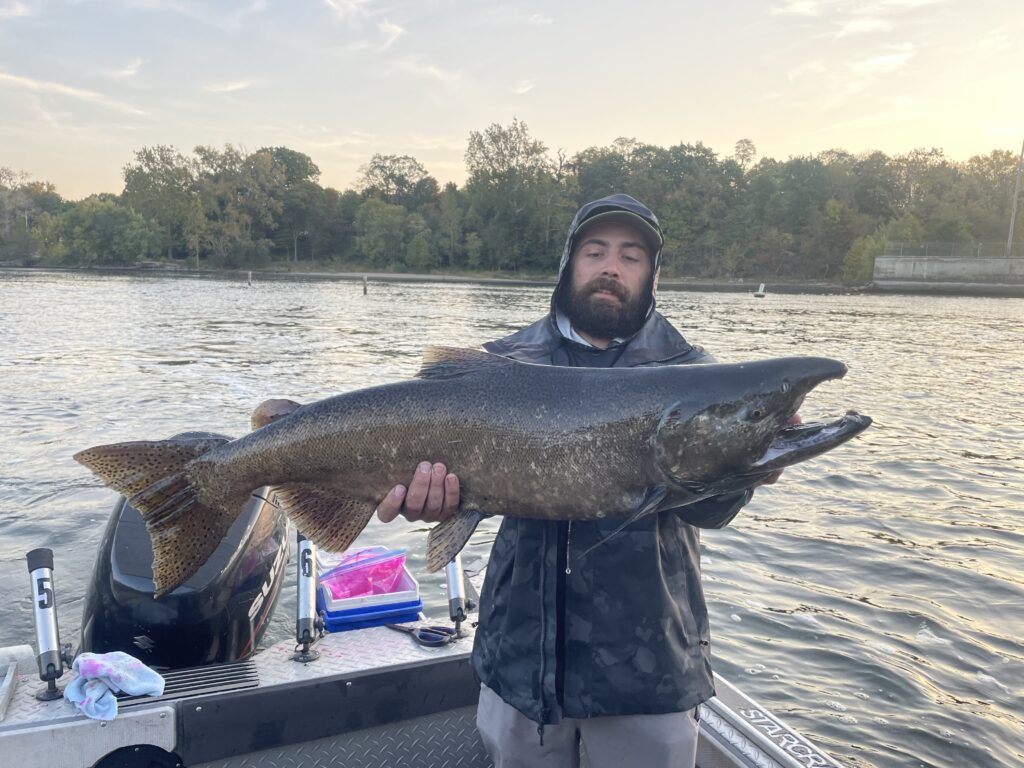
The St. Joe River salmon run is one of the most anticipated fishing events on the southern Lake Michigan calendar. Every fall, king salmon and coho salmon make their way out of the lake and into the river, drawing anglers from across the region to chase hard-fighting fish in moving water. Captain Ted Penrod of Penrod & Reel has guided this fishery for years, and his firsthand knowledge of the run’s timing is exactly what you need before you plan your trip.
Why Salmon Return to the St. Joe
Understanding why salmon return to the river makes the timing much more understandable. Salmon are known for returning to the river systems where they were imprinted as young fish, and the St. Joe supports both stocked and naturally reproduced salmon. That predictable fall movement is part of what makes the St. Joe such an important river fishery in southern Lake Michigan year after year.
The two species in play here also move on slightly different schedules. Chinook salmon, often called king salmon, usually mature in four years. Coho salmon are typically on a shorter timeline, which is one reason their fall movement can overlap with kings without following the exact same schedule. Both species are part of the fall river run, but they do not always show up, peak, or wind down at the same pace.
When the Run Begins
The salmon start showing up in the St. Joe River sometime in September, when cooler nights begin pulling river temperatures down. Water temperature and oxygen levels are the key drivers. Salmon are cold-water fish, and the warmer water of late summer simply does not hold enough oxygen to bring them upriver in numbers. As temperatures drop, the fish begin moving toward the river and positioning themselves in areas where conditions are more comfortable.
In the early weeks of the run, salmon tend to hold near spring-fed feeder creeks that carry slightly cooler water than the main channel. They also stack up in front of dams, where turbulent water brings higher oxygen levels. Berrien Springs sits near the first major dam on the St. Joe from Lake Michigan, which is a big part of why that location becomes such a productive early-run spot. As Ted put it, “They can’t really just go by you. So it’s easier to fish there.”
When It Peaks
The peak of the salmon run on the St. Joe typically arrives in October. By then, water temperatures have dropped enough to pull fish out of the deeper holes and onto the gravel where spawning happens. Once salmon commit to a spawning area, conditions almost stop mattering. In Ted’s words, “Once they’re up there and they’re spawning, they’re at the end of their life cycle, and they’re going to do what Mother Nature’s put them there to do.”
Most salmon on the St. Joe are caught on lures. Spinners and crankbaits are the staples, either trolled out the back of the boat or cast through likely holding water. Some bait tactics produce as well, but lures do the heavy lifting throughout the run.
What changes by October is the reason the fish bite. Earlier in the run, salmon are still feeding. They are aggressive, willing to chase, and ready to strike almost anything they can fit in their mouth. Once they move onto the gravel, their bodies start shutting down, and their stomachs shrink to make room for eggs or milt. They keep striking, but it is no longer about food. It is feeding instinct, aggression, and defense of the spawning bed. Salmon will even eat their own eggs as they drift downstream, not because they are hungry, but to keep that scent from drawing steelhead up to the nest.
How It Winds Down
King salmon are usually past their prime by late October. Their bodies begin to break down visibly toward the end of the cycle, a process anglers sometimes call “going zombie,” and by that point, the meat quality has often declined. As fall salmon mature in the river, the flesh can also become noticeably paler than what anglers see in bright lake-caught fish.
Ted described it plainly: “You’ll catch salmon out in the lake, and their meat’s pink. And once you start catching them in the river in the fall, their meat turns white because their body is taking all the nutrients out of that meat and putting it into their spawn.”
Coho can hang around a little longer than kings. They often move later in the fall, and some St. Joe coho are caught after the main October push. As the king salmon begin to fade, coho can become the better target for anglers still working the river later in the season. Once both species have run their course, attention shifts to the steelhead moving in behind the salmon to feed on eggs. After that, the river transitions into a completely different fishery in the colder months ahead.
Plan Your Trip Around the Run
Ted and his team run river trips during this season, targeting both kings and coho as conditions develop. The earlier you book, the better your odds of landing the date you want during the heart of the run. If you are hoping to experience the St. Joe River salmon run at its best, plan around the cooling water, the October peak, and the short but exciting window when these fish make their move.
Ready to Book?
Do not miss the short window when the St. Joe River salmon run is at its best. Book your fall salmon charter with Captain Ted today and get ready to chase kings and coho during one of the most exciting times of the season.