
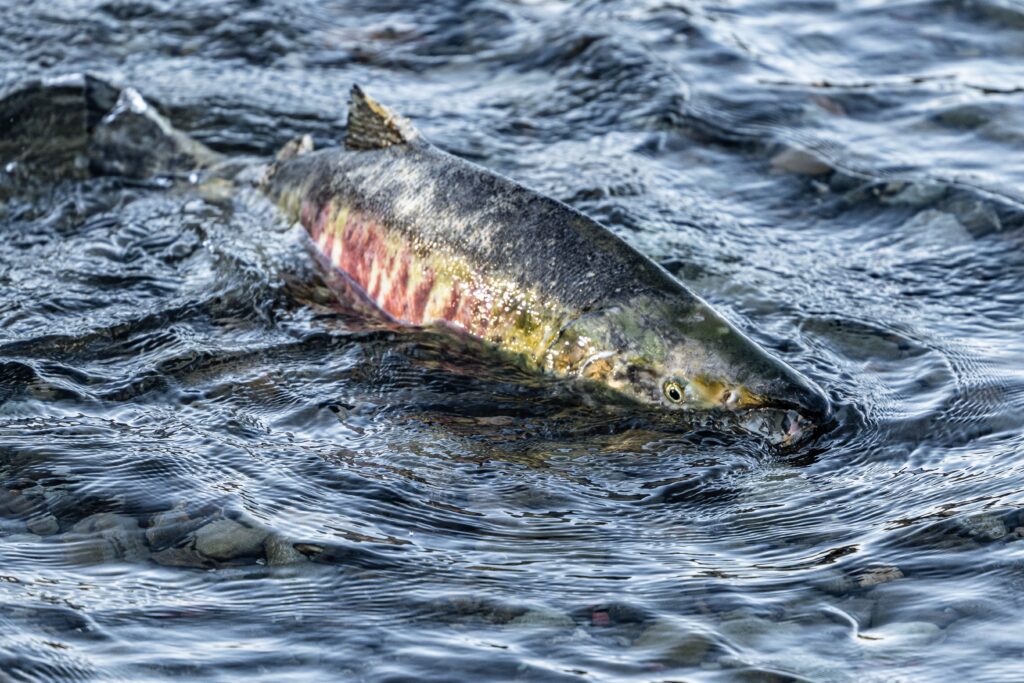
Spring is when Lake Michigan salmon fishing comes back to life, and for anglers who have been waiting out the winter, the transition happens fast. Water temperatures climb, baitfish concentrate in ways that draw predators toward accessible depths, and the window that opens between April and June is one of the most productive stretches of the entire year. Understanding what drives the spring bite makes the difference between a good trip and a great one.
What Spring Means for Lake Michigan Salmon
The spring salmon season on Lake Michigan is defined by water temperature more than anything else. As surface temperatures climb through the 40s and stabilize in key nearshore zones, salmon that have spent the winter scattered across the lake begin to move and feed with purpose. Alewives, which are the primary forage fish for both king and coho salmon, push into transitional zones between cold and warm water, and the salmon follow. That concentration of bait and predator in the same manageable stretch of water is what makes spring so productive.
Both species are active during the spring window, but they behave differently and often occupy different parts of the water column. Coho tend to run shallower and are often found in the upper portion of the water column, especially early in the season. King salmon, also called Chinook, are typically a bit deeper but are significantly more accessible in spring than they will be in the heat of summer when they chase cold water down well past the reach of shorter lines. Spring is the season when both species are genuinely in play on the same outing, and that variety is part of what makes it so appealing.
Reading the Water in Spring
Temperature breaks are the single most important piece of structure in spring salmon fishing on Lake Michigan. These are the zones where warming surface water meets colder water pushing up from depth, and they function like a current seam in a river, bait concentrates along them, and predators stack up to feed. A captain who knows how to read the surface temperature data and find these breaks is doing the most important navigational work of the day before a single line is in the water.
Beyond temperature, baitfish activity visible on electronics tells a detailed story about where salmon are likely to be positioned. Tight balls of alewives on the graph, especially when suspended at consistent depths, almost always mean salmon are nearby. Color changes in the water, where the clearer offshore water meets the more turbid nearshore zone, are another reliable indicator. Spring fishing rewards observation, and the angler on a charter with an experienced captain benefits from someone who has spent years learning how to read what the lake is showing.
How Spring Salmon Are Caught
Trolling is the standard approach for spring salmon on Lake Michigan, and a well-set spread covers multiple depths and distances simultaneously to put baits in front of fish wherever they are holding. Downriggers are the most precise tool for placing lures at a specific depth, and in spring, they are typically set shallower than in midsummer. Planer boards and diving devices extend the spread horizontally, covering more water on each pass and reducing the chances of spooking fish that are closer to the surface.
Spoons are a proven spring producer, particularly in brighter finishes that mimic the flash of a fleeing alewife. The specific patterns and colors that are working on any given day tend to shift based on light conditions, water clarity, and what the fish are keyed on, which is one more reason why fishing with a captain who runs this water regularly pays off. A good charter has a range of setups that have earned their place in the spread through seasons of real results, not guesswork.
What to Expect on the Water
Spring mornings on Lake Michigan can be genuinely cold, and the lake itself is unpredictable in April and May. Conditions that are calm at sunrise can change significantly by midday, and dressing in layers is not optional. A waterproof outer layer, warm base layers, and grip-soled footwear are all practical necessities rather than suggestions. Charters are run by captains who monitor conditions and will communicate honestly about what to expect on any given day.
The fishing itself, when conditions cooperate, can be fast. Spring salmon are actively feeding and not particularly finicky, which means a proper spread often gets hit within the first hour on productive water. Multiple rods going at once is not unusual, and the pace of a good spring morning gives everyone on the boat a chance to work a fish. For first-time charter anglers, spring is an excellent introduction to what Lake Michigan salmon fishing looks like at its best. That includes active fish, manageable depths, and enough variety in the catch to keep the experience engaging from start to finish.
When to Book and What to Know
The spring salmon season runs roughly from early April through June, with coho action often strong early and king salmon becoming more consistent as conditions develop later in the spring. Charter dates in May and early June fill well ahead of the season, particularly on weekends, so anyone with a specific date in mind should secure it early rather than assuming availability will hold. A midweek spring trip is often just as productive as a weekend one, and it comes with the added benefit of a less crowded harbor and more flexibility on timing.
There is no special experience required to enjoy a spring salmon charter. The captain and crew handle the tackle, the navigation, and the fish-fighting coaching for anyone who needs it. What an angler brings to the trip is a willingness to be present, to follow direction, and to be ready when a rod goes off. The lake takes care of the rest.
Ready for Spring Salmon Season
If spring salmon fishing on Lake Michigan is on your list, the time to get on the calendar is now. Penrod & Reel runs spring charters out of southwest Michigan with the local knowledge and experience to put anglers on fish during one of the best windows of the year. Book a spring charter and get on the water before the best dates are gone.